Measure tree debris by piece size and access, not by pile footprint alone. A few dense trunk rounds can outweigh a much larger pile of leafy limbs.
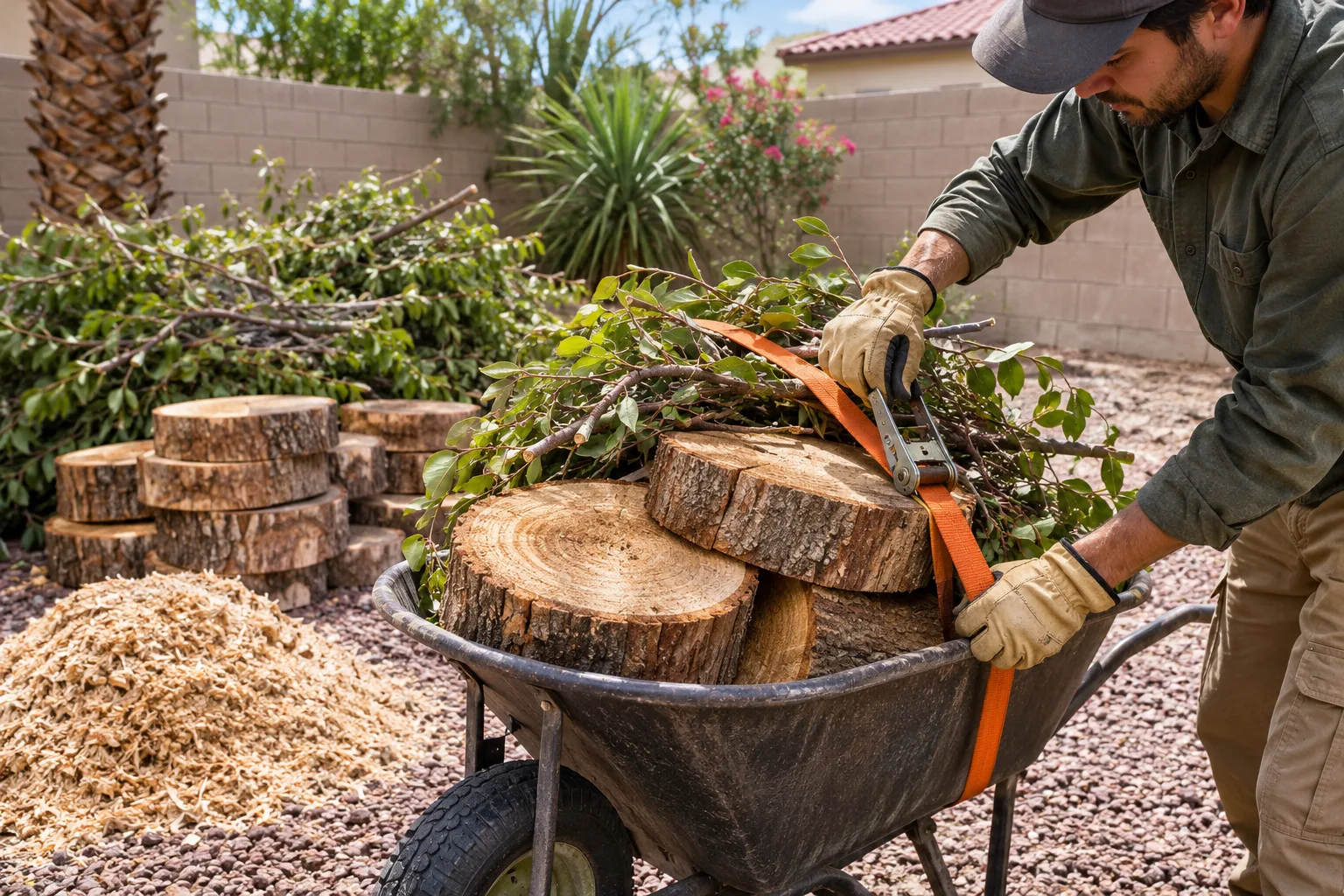
Separate rounds from branches in your notes
Record trunk-round diameter and thickness, then photograph the largest piece beside the tape. For branches, record the longest piece and the thickest fork. Leafy crowns should be shown from two sides because their loose volume is hard to judge from one angle.
Do not move unstable material to measure it
This guide applies after tree work is finished and material rests safely on the ground. Leave hanging limbs, lodged trunks and bent wood under pressure to qualified tree professionals. OSHA warns that branches can be thrown back or release stored pressure during cutting.
| Material | Useful measurement | Access note |
|---|---|---|
| Trunk rounds | Diameter, thickness, count | Can a wheelbarrow reach them? |
| Long limbs | Length, thickest diameter | Gate width and turning space |
| Leafy crowns | Pile length, width, height | Containment needed along route |
| Sawdust and chips | Container count or tarp area | Surface protection and cleanup |
Map the travel path
Measure gate clearance, not the decorative opening around it. Note tight corners, raised thresholds, steps, loose gravel and finished surfaces. Photograph the loading point from the yard so the full route is visible in sequence.
Use these notes with the tree debris removal page. Tree removal, active cutting and stump work are separate services and need their own qualified assessment.